The power of place.
Every place is unique, has its own character and specificities: by its history, its natural elements, by the people who live there and give it colour. From this arises the power of a place. Its potential that we need to get to know and use. Who better to bring out that potential than the people who live there every day and interact with others?
The girls of Girls Make the City seek to understand that power of their neighbourhood together, by talking about it with each other and people who know the place well and using its potential as a vehicle for what they are looking for: new initiatives and solutions to feel freer and safer as girls and to claim public space for all girls and women.


Marolles, Brussels
Story of place by the girls:
The Marolles has always been a vibrant, working-class neighborhood in the heart of Brussels. On the edge of the district, between the Kapelle Church and Saint-Jan Berchmans College, you’ll find our skate park, a space that girls also use and, in doing so, claim their place.


Molenbeek-West, Brussels
For some, it is a hellhole. Others don’t feel at home here. These are prejudices because they don’t know Molenbeek and have never been here. Yes, Molenbeek has its problems, but there are also many opportunities.


Langa, Cape Town
Our neighbourhood of Langa is Cape Town’s oldest township in South Africa. We celebrated our 100th anniversary in 2023. Langa therefore has a history and a powerful memory as a result.


Ostend, Belgium
Story of place by the girls:
The Leopold Park is more than just a green lung in the heart of Ostend: it is a mirror of our society and of the tensions that public space inevitably carries. For us, as the Girls Make the City group in Ostend, this park is at once a place of opportunity and of obstacles.


Athlone, Cape Town
Story of place by the girls:
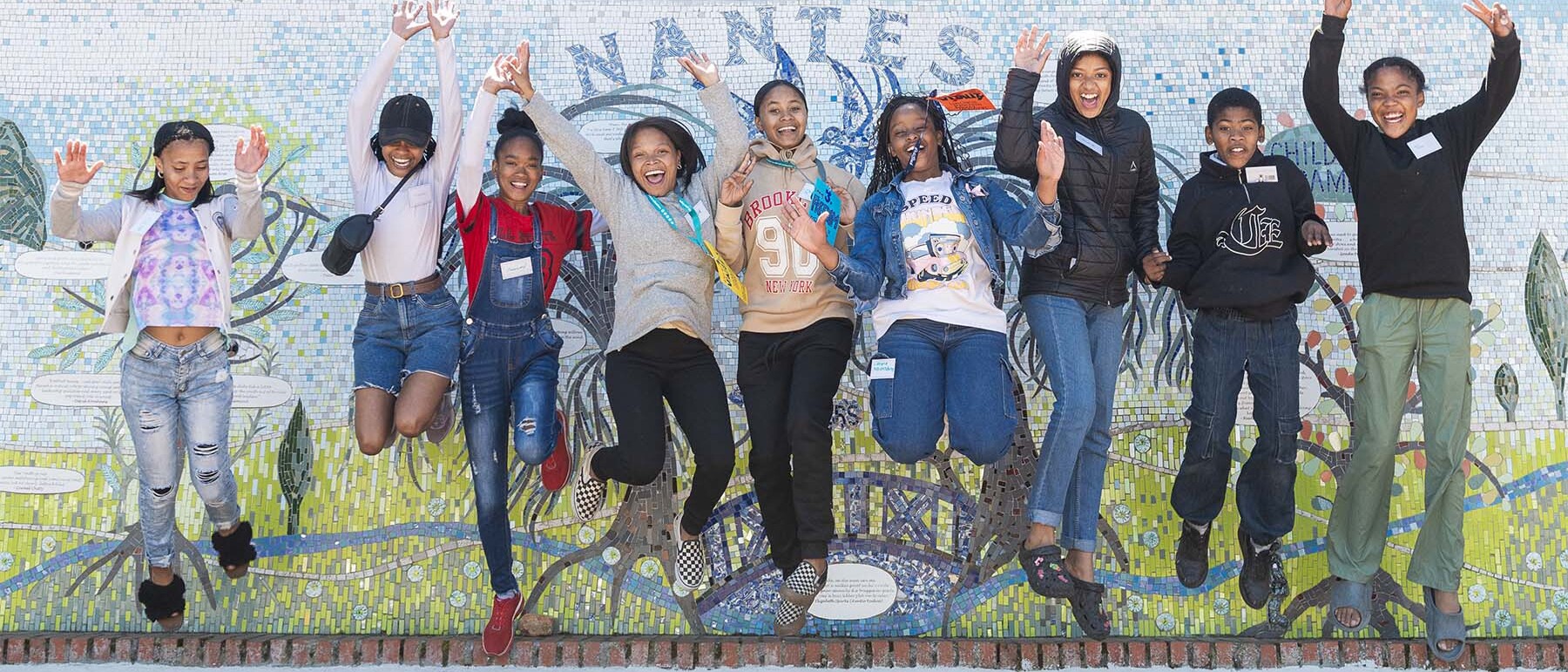
Nantes Park in Athlone holds a layered story. This 17-hectare green space became a gathering place for a large coloured community forcibly relocated from District 6 during apartheid. People used to gather here to listen to radio shows, one of which featured a character named Nantes. That is how the park got its name. But beneath this history lies the weight of displacement, gang violence, and many female victims of systemic neglect.
